


Budget should bring in new policies, modify archaic policies: Ashwajit Singh, MD- IPE Global

The forthcoming budget should allocate funds towards increased engagement of variegated stakeholders through new partnership models such as social impact bonds and challenge funds that have gained traction in many capital markets as an effective instrument to funnel funds from international donor and corporate social responsibility.

The developmental sector in India has undergone a transformation in the last decade. The dependence on international funding has receded as India’s economy is improving and government spends in some of the social sector issues such as education, health, social justice and environment has risen. While many have questioned the appropriate use and impact of these investments by the government, there is scope for businesses, foundations and philanthropic organisations to play a key role in bringing innovative solutions and best practices to India, offering technical assistance, systems strengthening, highlighting neglected issues, advocating for policy change and ensuring governance.


India needs to maintain the momentum of socio-economic development that we are witnessing today so that the funds achieve the desired impact, benefits reach the desired communities, are replicable at scale, and are free from leakages. This budget should ensure that there are enough funds under various ministries to ensure that existing policies are implemented effectively, archaic policies are modified and new policies are developed that reflect the needs and aspirations of the growing nation. A case in point are the National Education Policy (NEP) and the National Health Policy that have been unduly delayed.


Global economic and political changes affect the amount and sometimes dictate the focus of the development funds to developing nations. The Brexit announcement also promises a massive boost to the India-UK relations. New opportunities for the UK and India to cooperate more closely and develop stronger trading links will emerge as UK re-aligns its foreign policy and trade priorities in times to come. The world is united in working towards Sustainable Development Goals (SDGs) and all countries are doing their bit. In this context, the need for multi-stakeholder partnerships becomes critical and businesses are realising that investment in SGDs make economic sense as well.


Just one single goal of gender equity could contribute up to $ 28 trillion to global GDP by 2025, according to one estimate. A study released at the World Economic Forum this year found that putting SDGs at the heart of the world’s economic strategy could unleash a steep-change in growth. For example, investment in sustainable infrastructure alone could generate opportunities worth at least $ 12 trillion and up to 380 million new jobs by 2030.
 

This government has introduced various social sector programs and initiatives that have the potential to create impact at scale. The forthcoming budget should allocate funds towards increased engagement of variegated stakeholders through new partnership models such as social impact bonds and challenge funds that have gained traction in many capital markets as an effective instrument to funnel funds from international donor and corporate social responsibility.

Nikos Papachristodoulou

Chief Operating Officer

Expertise

Partnership Development • Operations Management • Business Development • Project Management • Advocacy • Leadership Development and Change Management

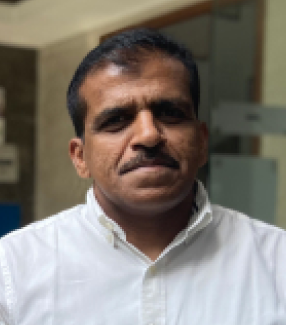
M.K. Padma Kumar is involved in developing strategies and managing operations for the IPE Global Group.

He has over 25 years of experience in the development sector, working in civil society organisations and international development agencies like DANIDA and DFID. As the Head of State Partnerships at the DFID India, he was responsible for developing partnerships, programme design, management and strategic oversight of all programmes implemented in Bihar, Madhya Pradesh and Odisha. He has managed various development programmes. His expertise lies in driving operational, financial and programmatic transformations. Before DFID, he was associated with Danish International Development Agency (DANIDA), Help Age and World Wildlife Fund.

He holds a Master’s degree in Business Management with specialisation in Human Resource Management and Finance. He is extensively trained in Project Cycle Management, Grant Management, Performance Management, Leadership Skills and Change Management.


Abdul Rahim

Chief Knowledge Officer

Expertise

Management Consulting • Finance • Governance • Change Management • Knowledge Management • ICT4D • Communications • Business Strategy

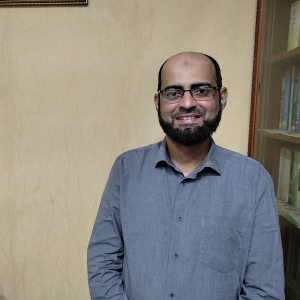
Abdul Rahim is a senior development professional with over 20 years of experience across diverse sectors, including urban, health, rural & social development, and IT & e-governance. He has led several large, multi-year, multi-departmental projects such as the Health Systems Development Initiative (HSDI) for the Government of West Bengal; Odisha Modernising Economy, Governance & Administration (OMEGA) programme for the Government of Odisha, and Growth Resources and Opportunities for Wealth Creation (GROW) with the Government of Bihar.

He played a key role as the Quality Monitoring and Evaluation Expert in the DFID-supported Knowledge Partnership Programme (KPP), Knowledge Management (KM) and M&E Specialist in USAID-supported SAMRIDH and SAMVEG Projects. He has served as the Cross-Learning Platform Expert for the BMGF-supported WeCan programme. He has been an advisor to several government agencies throughout India and internationally across Bangladesh, Afghanistan and Jordan.

He holds a Post Graduate Diploma in Business Management from XLRI Jamshedpur (India). He is an accredited Management Teacher from AIMA. He’s a a certified Trainer, NLP Practitioner and a member of Toastmasters International & Junior Chamber International.

LIFE AT IPE

Learning &
Development (L&D)

We inspire people to be better.

Our intuitive and personalised programmes provide clear path for growth, leadership development, and help people sharpen their skills.

0 %
People trained in last 3 years
0 %
Participation in L&D Initiatives in 2021

Your journey starts from Day One….

Structured Onboarding

Helps align expectations and lays the foundation for your success

New Hire Training

Makes you familiar with the organisation; helps you settle down in a new work environment

Customized L&D Platform

Helps upskill at your own pace through continuous learning and training programmes

Linkage with
Performance Management

Aligns resources and training needs based on your skill set

Learning is not always a formal process. We also align our organisation values to a culture of learning