


Digitally Invisible: Have girls and women been left behind in Digital India?

The Digital India programme was launched in 2015 as the flagship programme of the Government of India to transform India into a digitally empowered society. However, it was the Covid-19 pandemic that truly gave it a push, with remote online-based work becoming the order of the day for offices, and even schools, which had to impart education online. Only during the pandemic did access to technology and the ‘digital divide’ in the country become an important discussion. 

According to the National Family Health Survey-5, 2020, there is a significant digital divide between men and women, and between rural and urban India, with rural women having the lowest access to the internet. While 73% of urban men have used the internet, the corresponding figure for women is 56%, and in rural India, it stands at 55% of men versus 34% of women. Combined with the statistics on female labour force participation rates — a figure where India has one of the world’s lowest — this makes for rather underwhelming statistics. For instance, female participation rates decreased to 20% in 2019 and further to 16% during the quarter of July-September 2020. Hence, unless the gender gap in technology — access to devices and the internet — is addressed, not only will India’s digitising ambitions remain unfulfilled, but it will also impact women’s participation in the labour market.
Nikos Papachristodoulou

Chief Operating Officer

Expertise

Partnership Development • Operations Management • Business Development • Project Management • Advocacy • Leadership Development and Change Management

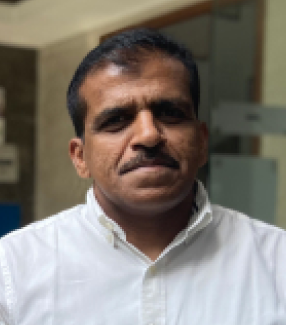
M.K. Padma Kumar is involved in developing strategies and managing operations for the IPE Global Group.

He has over 25 years of experience in the development sector, working in civil society organisations and international development agencies like DANIDA and DFID. As the Head of State Partnerships at the DFID India, he was responsible for developing partnerships, programme design, management and strategic oversight of all programmes implemented in Bihar, Madhya Pradesh and Odisha. He has managed various development programmes. His expertise lies in driving operational, financial and programmatic transformations. Before DFID, he was associated with Danish International Development Agency (DANIDA), Help Age and World Wildlife Fund.

He holds a Master’s degree in Business Management with specialisation in Human Resource Management and Finance. He is extensively trained in Project Cycle Management, Grant Management, Performance Management, Leadership Skills and Change Management.


Abdul Rahim

Chief Knowledge Officer

Expertise

Management Consulting • Finance • Governance • Change Management • Knowledge Management • ICT4D • Communications • Business Strategy

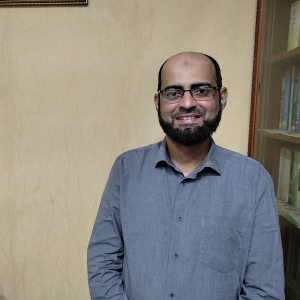
Abdul Rahim is a senior development professional with over 20 years of experience across diverse sectors, including urban, health, rural & social development, and IT & e-governance. He has led several large, multi-year, multi-departmental projects such as the Health Systems Development Initiative (HSDI) for the Government of West Bengal; Odisha Modernising Economy, Governance & Administration (OMEGA) programme for the Government of Odisha, and Growth Resources and Opportunities for Wealth Creation (GROW) with the Government of Bihar.

He played a key role as the Quality Monitoring and Evaluation Expert in the DFID-supported Knowledge Partnership Programme (KPP), Knowledge Management (KM) and M&E Specialist in USAID-supported SAMRIDH and SAMVEG Projects. He has served as the Cross-Learning Platform Expert for the BMGF-supported WeCan programme. He has been an advisor to several government agencies throughout India and internationally across Bangladesh, Afghanistan and Jordan.

He holds a Post Graduate Diploma in Business Management from XLRI Jamshedpur (India). He is an accredited Management Teacher from AIMA. He’s a a certified Trainer, NLP Practitioner and a member of Toastmasters International & Junior Chamber International.

LIFE AT IPE

Learning &
Development (L&D)

We inspire people to be better.

Our intuitive and personalised programmes provide clear path for growth, leadership development, and help people sharpen their skills.

0 %
People trained in last 3 years
0 %
Participation in L&D Initiatives in 2021

Your journey starts from Day One….

Structured Onboarding

Helps align expectations and lays the foundation for your success

New Hire Training

Makes you familiar with the organisation; helps you settle down in a new work environment

Customized L&D Platform

Helps upskill at your own pace through continuous learning and training programmes

Linkage with
Performance Management

Aligns resources and training needs based on your skill set

Learning is not always a formal process. We also align our organisation values to a culture of learning