


Mumbai and its suburbs have been reeling under what is considered to be the heaviest rainfall in recent years—crossing 800mm of rainfall by August 19, against the monthly average of 560.8mm—leading to widespread water logging, suspension of suburban train services, and delaying of flights. According to the news reports, two deaths have been reported so far.
The India Meteorological Department predicted that intensity of heavy rains will go down from August 21, but moderate rains will persist thereafter.
According to the recent analysis by Climate Trends, experts warned that such events will only grow more frequent and intense in a warming world. The analysis cited that the moisture supply for the summer monsoon rainfall along the west coast of the Indian subcontinent is mainly transported from the Arabian Sea. The Middle East is now warming almost two times faster than other inhabited parts of the world and has been causing a dramatic increase in atmospheric instability in the Arabian Sea by thrusting moisture supplies northward.
Need for Early Warnings and Urban Planning
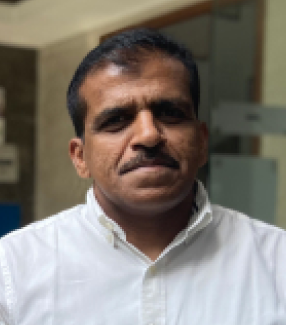
Dr. Subimal Ghosh, Chair Professor of the Department of Civil Engineering & Convener, IIT Mumbai, said, “In this scenario, the only way out is to have a very good network of early warning systems, nowcast systems for urban flooding. More importantly, these advance warning systems should be citizen-centric, which means the information should reach out to people so informed decisions can be taken. IIT Mumbai has created the Mumbai Flood Monitoring System, which helps in disseminating timely information to various stakeholders.”
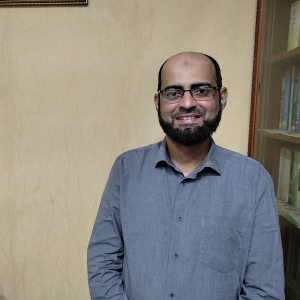
The analysis also called for other ways to deal with urban flooding. Vishwas Chitale, a fellow at the Council of Energy, Environment, and Water (CEEW), called for mapping of urban floods that includes identifying flood-prone areas in the given city and conducting exercises to ascertain the flood levels.
“We need to come up with some practical solutions on the ground to be able to manage urban flooding better. This can also include creating an IDF [Intensity-Duration-Frequency] mechanism, which can give us an idea of which part of the city would receive how much rainfall in the future and what would be the water discharge. This would help the authorities prepare and manage urban flooding in a planned way,” said Chitale.
The IDF curve is a graphical representation of the statistical relationship between rainfall intensity, duration, and frequency of occurrence.
CEEW had also prepared a Thane City Action Plan for Flood Risk Management 2024, offering a framework for administrators to strengthen preparedness, response, and mitigation measures against urban floods. This plan was developed after accessing 52 years of rainfall data. The plan developed intensity-duration-frequency curves, estimating peak flow discharges, and creating a ward-wise urban flood risk index to identify vulnerable hotspots.
The framework provided actionable short-, medium- and long-term recommendations for both monsoon and non-monsoon phases, aimed at enhancing the city’s adaptive capacity and guiding its transformation into a flood-resilient smart city.
Abhinash Mohanty, Global Sector Head of Climate Change and Sustainability at IPE Global, an advisory group for scalable and sustainable solutions, and an Expert Reviewer of the IPCC AR(6), explained that submerged vehicles and knee-deep water in Mumbai were not surprising to its residents, as this is a recurring pattern during the monsoon season.
Mohanty further emphasised, “IPE Global is supporting BMC in developing a robust real-time AI-ML enabled Multi-Hazard Risk Atlas for Mumbai, which will help build resilience and ensure preparedness by climate-proofing the lives, livelihoods and infrastructures in the financial capital of India.”