

The Ethiopian government is so impressed with the India Education system that they flew all the way to India to study the Indian policies and later, implement them in their country.
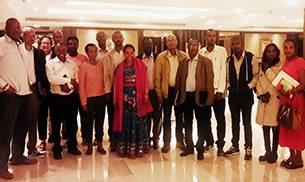
While we, the people of India, always criticise the education system, the Ethiopian government is so inspired by the same, that they came all way to learn more about the successful model of Indian education system. A team of 17 members attended an eight-day long journey to study the Indian education system at grassroots level.
Special applause for the mid-day meal scheme:
The concept of mid-day meal, a free meal programme for government school children, really impressed the members. “Food security plays a great role in raising the next generation, it is one of the outstanding achievements India has,” says Ato Tayachew Ayalen, Director of Mother Tongue and English language education development.
While we condemn the irresponsible behaviour of the management in providing clean and hygienic food, Dr. Jordene Hale, Chief of Party, says, “The idea of food is a risk worth taking, four, five children got sick but look at how many are fed.”
Other initiatives which impressed the team:
- Taking a leaf through the Indian education system, Ayalen says, “We are failing in student tracking system and India is maintaining it so well.”
- “Teachers in Ethiopia are not as skilled as teachers in India, may be due to the Teacher Eligibility Test (TET),” noted A to Birgam Moreda, Advisor to the state minister of General Education
- He further appreciated the Education Management Information System (EMIS) inspection system in India, as it maintains quality education, requirements in the school
- Government’s involvement in ensuring and promoting ‘Education for All’ in India
- The collaboration between the public and private sector, i.e. Public Private Partnership (PPP) models was appreciated
- The importance of three-language formula was noted with the special input of English language as one of the mandatory languages, while one regional language as well as official language, which is Hindi.
Education challenges in Ethiopia:
- Ethiopia’s growing youth population-the second largest in Africa-presents a huge challenge to the education system
- An estimated three million primary school-aged children and more than 20 million youth are currently outside of the formal school system
- Of the out-of-school youth, a large proportion have had no education at all (84 per cent in rural areas and 33 per cent in urban areas)
- Urban youth unemployment is 50 per cent and this figure is even higher in rural areas
The Ethiopian education system has been implemented under a mother tongue language policy, the goals of which are to improve literacy rates and academic achievement, as well as to enhance appreciation of local languages and cultures.
Reading for Ethiopia’s Achievement Developed (READ) programme
The delegation is visiting as part of United States Agency for International Development’s (USAID) Reading for Ethiopia’s Achievement Developed Monitoring and Evaluation (READ M&E) project), supported activity implemented by the American Institutes for Research (AIR).
READ M&E focuses on monitoring and evaluation of early grade reading and writing as well as the M&E needs of the overall USAID READ program. The READ programmes seek to improve the quality of reading and writing education for children in early grades for enabling greater learning in upper grades, and their work is aligned with the efforts of the Ministry of Education, regional state education bureaus (RSEBs), colleges of teacher education (CTEs), and other key development partners.
Who organized the meet?
IPE Global, an international development consulting group, organised the visit and stakeholder engagements for the delegation. Over the last 18 years, IPE Global has been working closely with the governments, multilateral and bilateral agencies providing expert technical assistance and solutions for equitable development and sustainable growth in developing countries. It is headquartered in Delhi, India with four international offices in United Kingdom, Kenya, Ethiopia and Bangladesh.