

International Girl Child Day: ‘India on the Right Path,’ Says Dharmendra Pradhan

On the occasion of International Girl Child Day (11 October), IPE Global and Centre for Knowledge and Development (CKD) jointly hosted NITI SAMVAAD, an event highlighting the importance of investing in and enabling young women to unlock their full potential to drive progress towards UN Sustainable Development Goal 5.

Bringing together stakeholders passionately working towards advancing the cause of gender equality and empowerment, the event saw the release of a policy brief titled Nurturing a Vibrant Girl Capital in India, with evidence-based, actionable recommendations to co-create an enabling environment for girls in India to unleash their full potential.

“Investing in girls is the foundation for nation-building. In India, eliminating gender disparities has the potential to deliver a remarkable 27% surge in GDP. A vibrant girl capital promises substantial social return and can steer social transformation and prosperity,” the introduction of the brief read.

Calling the release of Policy Brief timely, Dharmendra Pradhan, Minister for Education and Skill Development and Entrepreneurship, Government of India, said, “On reading the brief, I can proudly say that we are on the right path. Such discussions that bring together eminent policymakers & academicians are very important today. Investing in girls and young women goes a long way in building girl capital.”

Adding to the same Ashwajit Singh, Managing Director, IPE Global Limited, told The Quint, “While India has made progress in various aspects of gender equality, there is still work to be done to build “girl capital” in the country. On the occasion of Silver Jubilee celebration of IPE Global, we renew our commitment to advancing SDG Goal 5 and building girl capital by investing in the well-being, education, skills, and opportunities for girls to enable them to become empowered and productive members of society.”

The panel discussion featured experts from various fields who shared their insights on the challenges and opportunities for building girl capital in India. Atul Kumar Tiwari, Secretary, Ministry of Skill Development and Entrepreneurship; Alka Upadhyaya, Secretary, Department of Animal Husbandry and Dairying; Roli Singh, Additional Secretary, Ministry of Health and Family Welfare; Dr Devang Khakhar, currently Professor and Former Director, IIT Bombay attended the event.

With a diverse representation and participation from the government, academia, policy makers, private sector, civil society among others, the event contributed to steering conversations around building girl capital in India and emphasised the need for continued efforts to ensure they have equal opportunities in education, health, and every aspect of life.

Nikos Papachristodoulou

Chief Operating Officer

Expertise

Partnership Development • Operations Management • Business Development • Project Management • Advocacy • Leadership Development and Change Management

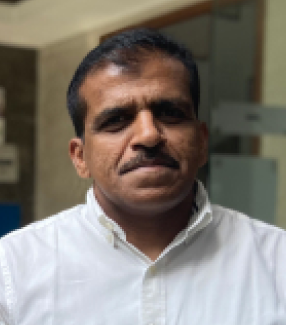
M.K. Padma Kumar is involved in developing strategies and managing operations for the IPE Global Group.

He has over 25 years of experience in the development sector, working in civil society organisations and international development agencies like DANIDA and DFID. As the Head of State Partnerships at the DFID India, he was responsible for developing partnerships, programme design, management and strategic oversight of all programmes implemented in Bihar, Madhya Pradesh and Odisha. He has managed various development programmes. His expertise lies in driving operational, financial and programmatic transformations. Before DFID, he was associated with Danish International Development Agency (DANIDA), Help Age and World Wildlife Fund.

He holds a Master’s degree in Business Management with specialisation in Human Resource Management and Finance. He is extensively trained in Project Cycle Management, Grant Management, Performance Management, Leadership Skills and Change Management.


Abdul Rahim

Chief Knowledge Officer

Expertise

Management Consulting • Finance • Governance • Change Management • Knowledge Management • ICT4D • Communications • Business Strategy

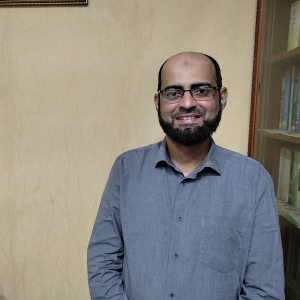
Abdul Rahim is a senior development professional with over 20 years of experience across diverse sectors, including urban, health, rural & social development, and IT & e-governance. He has led several large, multi-year, multi-departmental projects such as the Health Systems Development Initiative (HSDI) for the Government of West Bengal; Odisha Modernising Economy, Governance & Administration (OMEGA) programme for the Government of Odisha, and Growth Resources and Opportunities for Wealth Creation (GROW) with the Government of Bihar.

He played a key role as the Quality Monitoring and Evaluation Expert in the DFID-supported Knowledge Partnership Programme (KPP), Knowledge Management (KM) and M&E Specialist in USAID-supported SAMRIDH and SAMVEG Projects. He has served as the Cross-Learning Platform Expert for the BMGF-supported WeCan programme. He has been an advisor to several government agencies throughout India and internationally across Bangladesh, Afghanistan and Jordan.

He holds a Post Graduate Diploma in Business Management from XLRI Jamshedpur (India). He is an accredited Management Teacher from AIMA. He’s a a certified Trainer, NLP Practitioner and a member of Toastmasters International & Junior Chamber International.

LIFE AT IPE

Learning &
Development (L&D)

We inspire people to be better.

Our intuitive and personalised programmes provide clear path for growth, leadership development, and help people sharpen their skills.

0 %
People trained in last 3 years
0 %
Participation in L&D Initiatives in 2021

Your journey starts from Day One….

Structured Onboarding

Helps align expectations and lays the foundation for your success

New Hire Training

Makes you familiar with the organisation; helps you settle down in a new work environment

Customized L&D Platform

Helps upskill at your own pace through continuous learning and training programmes

Linkage with
Performance Management

Aligns resources and training needs based on your skill set

Learning is not always a formal process. We also align our organisation values to a culture of learning