


The Financial Express publishes an article authored by Ashwajit Singh, Chairman and Managing director, IPE Global titled

The Odisha Girls Incentive Programme (OGIP) is contributing towards improving secondary school enrolment, attendance and completion rates of Scheduled Caste (SC) and Scheduled Tribe (ST) students in Odisha through a system of direct transfer of scholarship to bank accounts of over 427,000 students.

The pre-matric scholarship scheme is being implemented by Government of Odisha, supported by the Department of International Development (DFID), UK, as a conditional cash transfer scheme, with scholarship being paid on achievement of 70% monthly attendance.

A state of art system to deliver scholarship directly to the bank account of the eligible students has been put in place under the technical assistance supported by DFID. In the year 2013-14 around 4.07 lakh students registered under the scheme and a sum of Rs.118 crores was disbursed directly to the bank account of the students.

Apart from the publicity of the scheme through  various types of communication material, print media and student orientation programmes at the school level, awareness generation was carried out through a cadre of Block Coordinators through a ‘discussion’ and ‘household counselling’ approach.Once the students are informed of the scheme, they are urged to apply for it in the prescribed form and submit the required documents, such as, copy of bank passbook, caste certificate and income proof.

The block coordinators facilitate  the opening of bank accounts and obtaining caste certificates , supported by the district administration.Application forms submitted by the students are scrutinised by the school principal and submitted to the Welfare Extension Officer of the block, who after due verification submits the same to the district office. A web-based online software is used for managing the disbursement of scholarship.

Data entry of the application form is carried out through an offline data entry software and synced to the live online database after verification.Details of attendance defaulters are also collected every month and recorded in the database. Thereafter, centralised disbursement of scholarship directly to the bank account of the eligible students is  carried by the state ST & SC Development  Department., through the State Treasury.

This initiative is a pioneering effort towards ‘education for all ‘and is focusing on encouraging children from the most backward and rural parts of Odisha to continue their studies.This has led to about 48 percent in decline in the drop-out rate and should be replicated in other states of India. By Ashwajit Singh, Chairman and Managing Director, IPE Global.

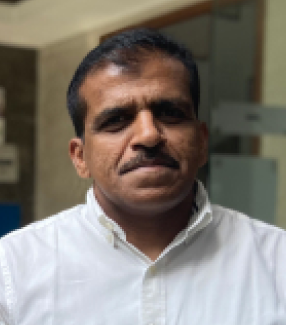
Nikos Papachristodoulou

Chief Operating Officer

Expertise

Partnership Development • Operations Management • Business Development • Project Management • Advocacy • Leadership Development and Change Management

M.K. Padma Kumar is involved in developing strategies and managing operations for the IPE Global Group.

He has over 25 years of experience in the development sector, working in civil society organisations and international development agencies like DANIDA and DFID. As the Head of State Partnerships at the DFID India, he was responsible for developing partnerships, programme design, management and strategic oversight of all programmes implemented in Bihar, Madhya Pradesh and Odisha. He has managed various development programmes. His expertise lies in driving operational, financial and programmatic transformations. Before DFID, he was associated with Danish International Development Agency (DANIDA), Help Age and World Wildlife Fund.

He holds a Master’s degree in Business Management with specialisation in Human Resource Management and Finance. He is extensively trained in Project Cycle Management, Grant Management, Performance Management, Leadership Skills and Change Management.


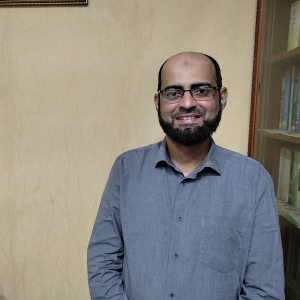
Abdul Rahim

Chief Knowledge Officer

Expertise

Management Consulting • Finance • Governance • Change Management • Knowledge Management • ICT4D • Communications • Business Strategy

Abdul Rahim is a senior development professional with over 20 years of experience across diverse sectors, including urban, health, rural & social development, and IT & e-governance. He has led several large, multi-year, multi-departmental projects such as the Health Systems Development Initiative (HSDI) for the Government of West Bengal; Odisha Modernising Economy, Governance & Administration (OMEGA) programme for the Government of Odisha, and Growth Resources and Opportunities for Wealth Creation (GROW) with the Government of Bihar.

He played a key role as the Quality Monitoring and Evaluation Expert in the DFID-supported Knowledge Partnership Programme (KPP), Knowledge Management (KM) and M&E Specialist in USAID-supported SAMRIDH and SAMVEG Projects. He has served as the Cross-Learning Platform Expert for the BMGF-supported WeCan programme. He has been an advisor to several government agencies throughout India and internationally across Bangladesh, Afghanistan and Jordan.

He holds a Post Graduate Diploma in Business Management from XLRI Jamshedpur (India). He is an accredited Management Teacher from AIMA. He’s a a certified Trainer, NLP Practitioner and a member of Toastmasters International & Junior Chamber International.

LIFE AT IPE

Learning &
Development (L&D)

We inspire people to be better.

Our intuitive and personalised programmes provide clear path for growth, leadership development, and help people sharpen their skills.

0 %
People trained in last 3 years
0 %
Participation in L&D Initiatives in 2021

Your journey starts from Day One….

Structured Onboarding

Helps align expectations and lays the foundation for your success

New Hire Training

Makes you familiar with the organisation; helps you settle down in a new work environment

Customized L&D Platform

Helps upskill at your own pace through continuous learning and training programmes

Linkage with
Performance Management

Aligns resources and training needs based on your skill set

Learning is not always a formal process. We also align our organisation values to a culture of learning